
Packaging Solutions
Export Packaging Solutions for Bulk Agricultural Shipments
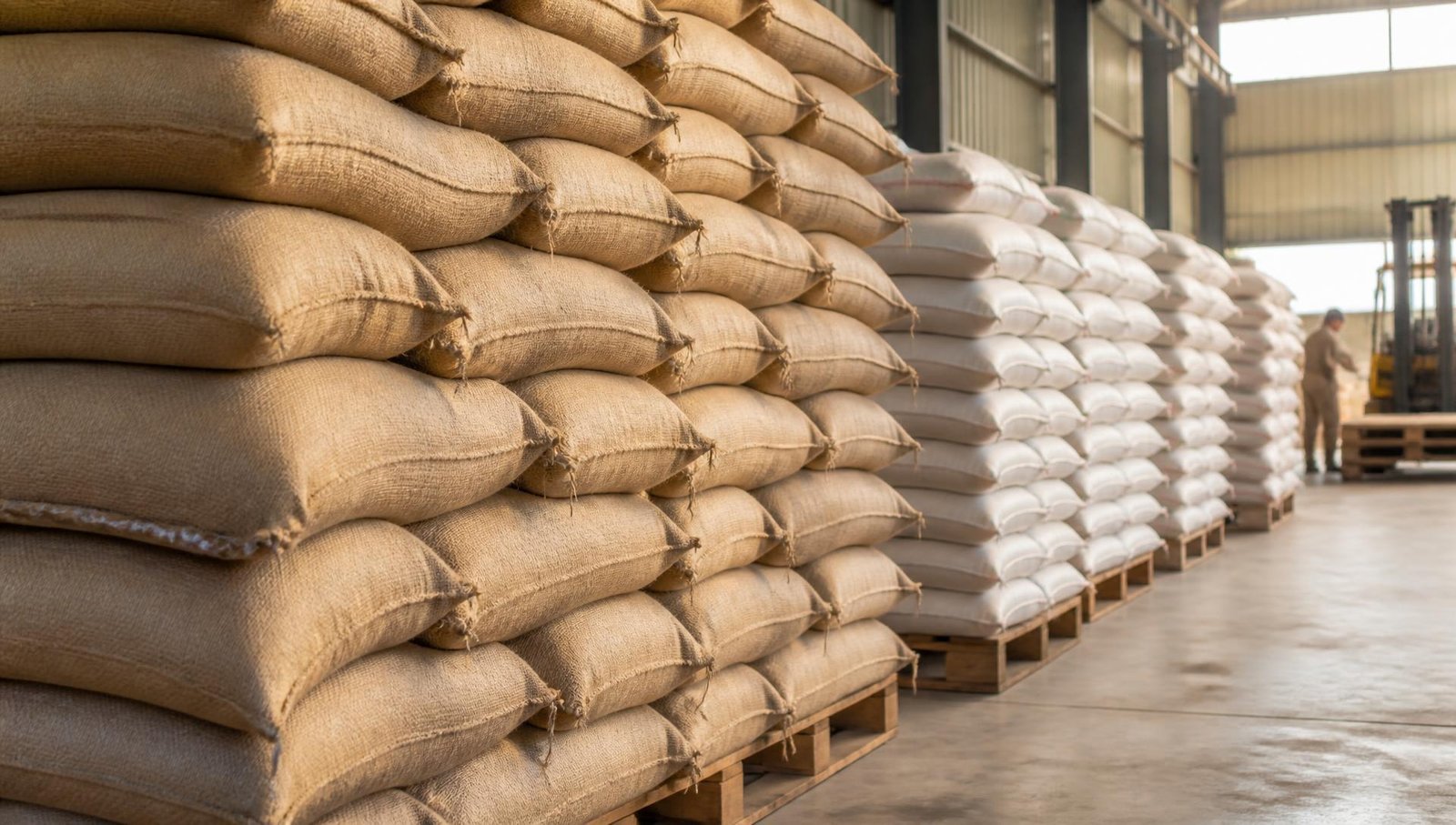
Packaging is selected against the destination market's handling, labelling and shelf requirements — from 1 kg retail and private label packs to 25 kg and 50 kg bags, 1 MT FIBC and container bulk, with marking, traceability and supervised stuffing.
Formats
Packaging Formats and Where They Fit
Each format is matched to a buyer model and a handling environment, then confirmed in the sales contract before production planning.
| Format | Typical Buyer Use | Material Options |
|---|---|---|
| Consumer packs (1–10 kg) | Retail and private label programmes | PP woven, BOPP laminated, PE pouch |
| 25 kg bags | Distribution, HORECA, repacking | PP woven, BOPP laminated, jute |
| 50 kg bags | Wholesale and institutional supply | PP woven, jute, non-woven |
| FIBC / jumbo bags (500 kg–1 MT) | Milling, processing and feed buyers | Food-grade FIBC with liner |
| Bulk in container liner | High-volume feed and processing cargo | Container bulk liner |
| Vacuum and carton packs | Premium rice and spice programmes | Vacuum brick packs in export cartons |
Packaging Support
What We Coordinate on Packaging
Artwork, compliance marking, traceability codes and loading protection are handled as part of shipment preparation, not as an afterthought.
Private Label & Buyer Branding
Buyer-owned artwork is coordinated with packaging partners, including print proofs and colour approval before a production run begins.
Marking & Labelling Compliance
Bag marking is aligned to destination labelling rules — net weight, origin, lot or batch code, packing and expiry dates, and importer details where required.
Barcodes & Batch Traceability
Barcodes, batch numbers and lot codes are applied where the buyer's distribution or retail programme requires traceable units.
Container Loading Patterns
Stacking and stowage patterns are planned per format and container size, with container cleanliness and dryness checked before stuffing.
Moisture & Transit Protection
Liners, desiccants, pallets and stretch wrapping are specified according to transit duration, humidity and discharge-port handling.
Load Documentation
Stuffing photographs, seal numbers and packing lists are recorded so the buyer can reconcile the shipment on arrival.
Container Loadability
Indicative Loading Quantities
Indicative only — actual loadability depends on commodity density, bag dimensions, stacking pattern and the shipping line's payload limits.
| Configuration | Indicative Load |
|---|---|
| 20 FT container · 25 kg bags | Approx. 18–26 MT depending on commodity |
| 20 FT container · 50 kg bags | Approx. 18–27 MT depending on commodity |
| 40 FT container · 25 kg bags | Approx. 24–28 MT, volume limited |
| 20 FT container · 1 MT FIBC | Typically 18–20 bags per container |
Detailed loading guidance is covered in our container loading guide and rice packaging guide.
FAQ
Packaging Questions From Buyers
Private label, material choice, transit protection and per-shipment changes.
Continue Exploring
Format selection differs by commodity and by destination handling environment.
Share Your Packaging Specification
Send bag weight, material, artwork status and destination port, and our trade desk will confirm feasible formats, marking requirements and container loadability.